Posted in General Blogs

Big and Small

Recently I have had the honor of being in a chat group with roughly 100 people, (mostly young, fresh out of college but some closer to retirement age), that have seen fit to uproot their lives and spend 2 years going to simply serve others. This is hope in action. And I couldn’t be more excited.

Many conversations, news reports, and social media posts today are full of fear, revenge, grief, and downright hateful thoughts, but there is not much action. Granted there are peaceful protests, sign making and chanting and I admire those people. Some sentiments I agree with and some I do not, but I fully respect the people doing something, especially if they are actually informed about what they are doing.

I read an interesting blog recently stating that the more news people watch, the less inclined they are to actually do anything about the situation. And yet, ironically, people claim they watch the news so they can be informed and work for change. The blog goes on to counter several points of contention about needing the news for information and suggesting instead real and meaningful conversations with people, books, periodicals – things with actual facts, not sound bites meant to skew one way or the other, as real sources of knowledge and inspiration.

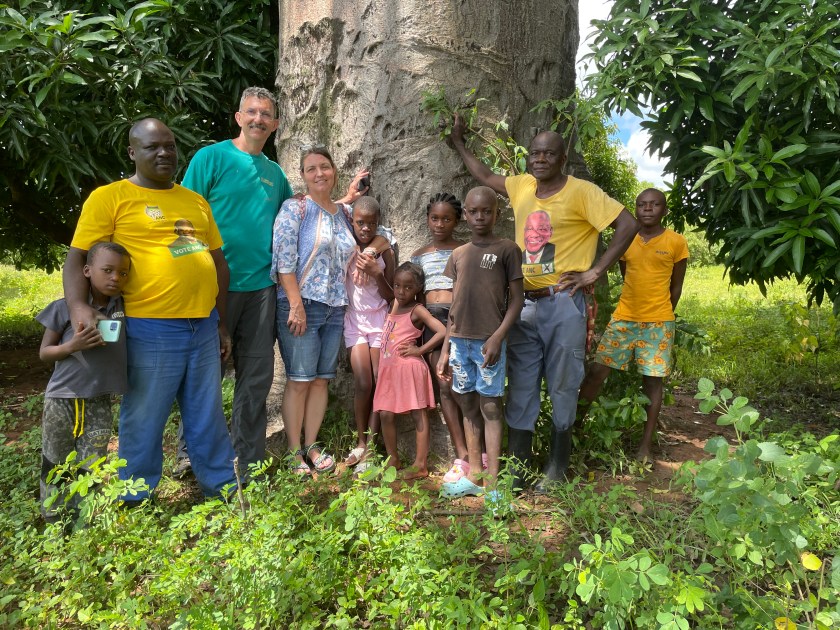
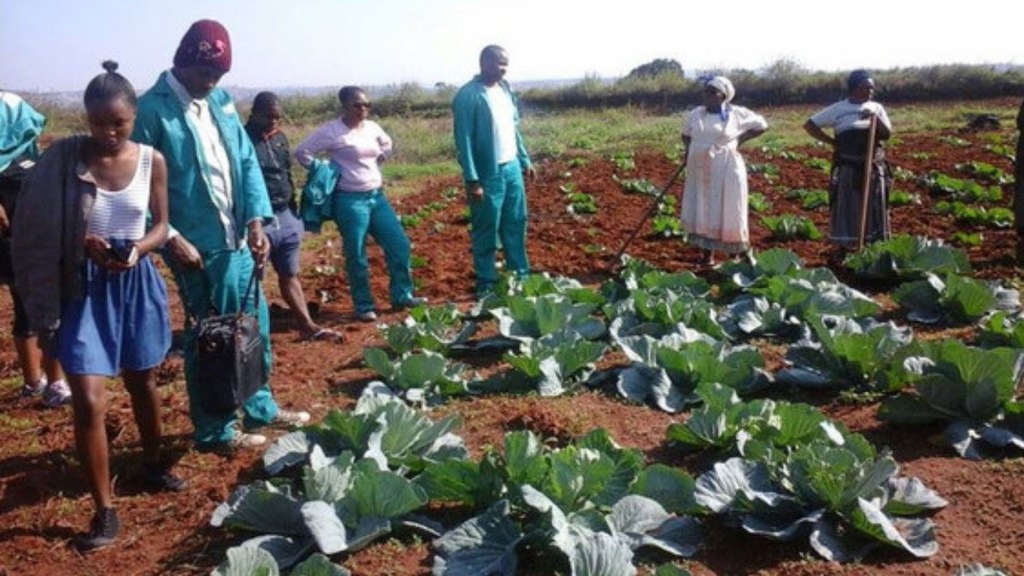
But there are many people taking action in the world in small and big ways. Food sufficiency has always been my passion and it is this that I focus on. Small actions, like our 2 school projects and seed bank in South Africa are small, but to me, meaningful steps in helping the planet by helping people have some sovereignty in their lives. The Regenerative Farm Design course Stephen, Themba, and I took recently in South Africa allowed us to meet many such people. Here’s a link shared with me yesterday by one of them

I encourage you to look around and see what people are doing in small and big ways to affect change. Yesterday I toured a small garden and chicken coop hidden in an overgrown field. Pathways were cut and shade cloth was put on top to detour hawks. There were random tomatoes and peppers thriving among copious amounts of rag weed. The house was a rental and the tenants were not allowed gardens or animals so they carved out a niche in a nearby field working to restore itself to a forest. It was tucked away yet beautiful and made my heart glad, not to mention it is helping to restore the field. It’s small, but it is progress.

On a bigger scale, to the 100 or so young people preparing to head to Senegal in September with the Peace Corps, I salute you. Your contributions are important and life changing not only for the people you will serve but for you. You will leave a ripple of big and small changes that continue to work for good long after you are gone. How about we all work to leave such ripples?
Posted in General Blogs, SA Specific - MCA, SA Specific Blogs

It’s All About the Chickens

Chickens are the gateway drug
chicken crossing the road: .

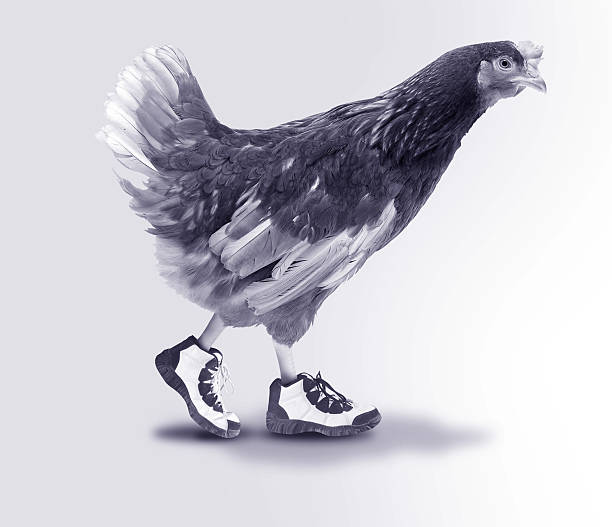
Chickens have been called the gateway drug. A quick search online will show you it’s a popular opinion. There is even a song on Spotify by Benny Lee called, “Chicken’s are the gateway drug to farming.” Those cute baby fluff balls, those delicious orange yolked eggs and, of course, Sunday dinner from your yard – it’s a delectable slippery slope.

Now, “real” farmers might disagree that 3, then 10, then 50 chickens has anything to do with their 1000’s of acres of monocropping and they would probably be right. But for some of the rest of us, chickens are truly the start of a better life. And why did I choose to use the progression of 3 chickens, 10 chickens, 50 chickens? – yep, you guessed it, experience – my own personal gateway. Chickens fit nicely in town and may even convince you to buy more acres. Again, experience, my own personal gateway.

And now that I have completely buried the lead, I would like to announce that Mahala Love has expanded our offerings in South Africa! We are bringing chickens to Musawenkosi Christian Academy, (MCA) and to our newest partners Royal Diamond Academy (RDA), both in KwaMhalnga, South Africa. Chickens and rabbits are being brought to the school and introduced to the garden system. They will be cared for by Grade 7 students at MCA and by 6-10th graders at RDA. We are super excited and we aren’t the only ones!

You may remember last April we introduced chickens and helped to expand the area for rabbits at Jacaranda Gardens in KwaMhlanga, with our chicken/rabbit/catfish conglomeration that we have never given a proper name. Stephen and Brenda have done a phenomenal job of expanding the 4 chickens we left them with and now have over 30. The rabbits are also doing well and doing what rabbits are known to do. Mahala Love was able to purchase 1 rooster and 3 hens for each of our school partners, as well as 3 rabbits. These flocks will allow the students to learn about taking care of the animals and then we will help them expand, if all goes well. The students were all eager to know if they would be able to raise enough to take home, so we will just say “you’re welcome,” to the parents now. ha!

Look for PART 2 of ” It’s all about the Chickens” to see how this fits into the 9 Day course Mahala Love Leaders just completed in George, South Africa. Thank you for reading this, sharing this, and thank you all so much for those of you that continue to donate to make all of this possible. We LOVE you for sharing your LOVE and allowing us to spread that with the world!

Posted in General Blogs, SA Specific Blogs

Welcome to Jacaranda Gardens!

In April 2024, Mahala Love welcomed our newest supported site in KwaMhlanga, South Africa. We welcome Jacaranda Gardens. Jacaranda Gardens is owned by our Regional South Africa leader, Stephen N. and his wife, Brenda. We have been working with Stephen for the past 7 months as a leader in the area and are now proud to support his site, Jacaranda Gardens.

Jacaranda Gardens serves as a Mahala Love demonstration site in the area and has already hosted an Open House to showcase the large amount of food that can be produced in a very small foot print. The recent build is 1.2 X 2 meters in size and produces – meat, eggs, and vegetables. Additionally, water purification functions support a catfish/bubblefish tank for even more protein.

Stephen and his wife, Brenda, hosted Robin on this last trip in April 2024, which allowed lots of time for planning, laughing, and building community. Follow this link to see more about the build at Jacaranda Gardens.

Mahala Love is so pleased to welcome this sweet family and their beautiful garden. Mahala Love and Jacaranda Gardens – Sharing with the World

Posted in General Blogs, SA Specific - MCA

Would You “Bawk” at Chicken-ponics?

Most of us have heard of hydroponics, and many of us have heard of aquaponics, but have you ever heard of chicken-ponics?

Hydroponics is the growing of plants with a water-based, nutrient-infused solution, bypassing the need for soil. There are several methods including roots dangling in the nutrient solution from floating pots to hydroton pellets (expanded clay) that anchor the roots.

There is also aquaponics which takes the hydroponics system up a level by adding fish to the system. (Aquaculture is the raising of fish. Mix this with HydroPonics and you get AquaPonics. ) In a great oversimplification, in aquaponics, the fish water, complete with fish waste, is cycled through the plants. This cycling fertilizes the plants while purifying and aerating the water for passing back into the fish. These systems can contain worms to increase efficiency (vermiponics) but that’s more syllables than I care to discuss, but here is a link for better details on Aquaponics.

Now we come to the fun part: what happens if we add chickens on top of the fish? Better yet, what if we add chickens and rabbits? This is where things can get crazy. A little research shows a variety of animals have been added to aquaponics to add nutrient waste into the system and feed the fish, as well as produce food for humans and animals. I’ve seen ducks (quack-aponics), rabbits, or chickens thrown into the mix. We are possibly looking to incorporate rabbits and chickens along with the fish and plants. My concern is keeping the water healthy enough to grow fresh veggies with the chicken waste involved. We are looking at different versions now and welcome any ideas or constructive criticism. The plan will be completed the second week of April 2024 and the build will be the following week.

The ultimate goal will be to maximize food production while minimizing space and external inputs. The system will be located at our leader, Stephen’s property in South Africa, and will then be used to teach others in his community how to replicate this system. We will also be looking to replicate this system at our demonstration farm in the US – but that is future news to be announced in May!

Stay tuned for pictures, plans, and updates on what we build and how it works. If you would like to donate to Mahala Love and projects like this, please click here. Thanks for reading!

Posted in General Blogs

Process and Progress

A week or so ago, Mahala Love applied for the Slow Food Negroni Week Fund grant. I will start by saying I love writing grants!. I love the freedom to let my mind wander through all the ideas Mahala Love and our partners discuss, the plans that have been created and then attempt to pare them down into manageable and logistically sound paths to be constrained within a specific set of funding goals. Perhaps, I am a bit of a nerd in that respect.

Once I have written a grant, I feel complete with the process. True, I occasionally check the email to see if there is any word, but I feel very satisfied with knowing that the path forward has been laid. The details have been thought through and I now know just what we need to make it happen. Perhaps we will be fortunate enough to receive the funding and can now focus simply on getting the work done. If not, I know we will move forward, it will just take longer to find the proper resources, and the phases will be slower or smaller. We will still plant a food forest, but will plant seeds and seedlings versus trees. We will still offer seeds to the families, and invite neighboring folks to our teaching garden, there will just be less varieties and offerings to start. But Mahala Love is focused and determined and know we will reach our goals to share in food security with our neighbors both here in the US and in South Africa.

Our partners in Limpopo, have also applied for the same grant. Themba has applied to further the progress of the seed bank and the efforts there to catalog, collect, and share seeds among the community. The two grants have some overlap in community and sharing of resources. Mahala Love staff will be attending the Seed Festival in September of this year and can’t wait to see and share more seeds with the folks in Limpopo.

So, as always, we welcome your prayers, good vibes, happy thoughts and ideas! And we will continue to work to make changes in our food systems and provide our neighbors and ourselves with healthy and nutrient dense food and build community in which to share it.

.

Posted in General Blogs

South Africa -Spring 2023

The beginning of 2023 has brought many adventures – Getting married being one of them! I am so happy to introduce Sam to the picture here at Mahala Love, not to mention to my life all around! He is funny, organized, and loves to do projects. He is a great asset to ML!

We had a combination Mahala Love working trip and honeymoon in South Africa in March. Sam got the crash course in people, food, places and our projects there. Except for the fact that he is very tall and South African shovels are perilously short, it was a great fit!

Together, Sam and I worked on the Seed library with Themba in Limpopo (see that page), met with Cinderella to design the new permaculture garden at the beautiful new school location, (See ML-South Africa, Mpumalanga) and did a little touristy sight seeing.

The trip was fantastic and never long enough. But September will be here soon enough and we can continue our work there. In the meantime, those locations are in very competent hands and the work continues there while we continue to work here.

Posted in General Blogs

Be Kind, Grow Things

It’s been pointed out lately that I tend to be, “reductive.” I think that’s code for terse, curt, short or any number of other words meaning not only – “to the point,” but most likely, “ too to the point.” Perhaps it is true. I do like a good basic noun-verb combination to start a conversation, with a few adjectives thrown in because I’m Southern by raising. Examples, “pick up your shoes” – Southern version – “Pick up your stinking shoes.”

I think it is in ideas that I tend to be reductive as oppose to words though. What seems to be complicated issues to some people, I seem to think are more simple. If you’re lost, either metaphorically or literally, why flounder alone driving in circles? Pause and ask for directions. When everyone is getting on my nerves, pause, look in the mirror, there is the source.

Here we are in the most confusing times of near history, with a nonstop onslaught of verbiage coming at us nearly 24/7. I find this hard to take. I don’t know why the same story is reported on 73.65 times in a single day, with 18 points of view from 13 people that I can see as having no connection other than someone handed them a microphone and a makeup artist to pat the shine off of their nose. Wait, who is this and why do they have an opinion and where did they get those facts and are those really facts and why do I trust her opinion and who told him to have that opinion in the first place and have any of these people actually searched for a fact on their own or are they merely regurgitating the spew from social media that will keep them existing as a persona, as opposed to be erased if the unpopular view dare be brought in to the light as anything that might beworthyofevenlookingatbutthenwhatabout… You get my point. Does anyone else feel this way?

So, with all of that, I would like to get to my point. Times are strange, people are stranger. I probably don’t understand you, and you probably don’t understand me. But I can still love you, honor you by listening to what you believe, and know you are a person as worthy of your opinions and place on this earth as am I. As we navigate unknown, unprecedented waters, let’s grow together – whether it be community, flowers, food, a government responsive to the folks who elect them, let’s all try and remember that we are neighbors, friends, and family long before and long after the stress and politics and pandemics of the day are over. Let’s just be kind, and grow some stinking things, shall we?

Posted in Limpopo

South Africa – Thoughts about Small Scale Farmers

Small Scale farmers were faced with uncertainty when the President of South Africa, Cyril Ramaphosa, announced the lock down, telling everyone to stay at home and restrict the movement of the people to only allow essential services.

The time that the president introduced the Lock Down, it was the exact time of completing the summer crops harvesting and moving to winter crops cultivation. Due to the government introduced Lock Down,  small scale farmers were unable to execute the duties at hand leading to the loss of sources of food and income and, also, interfering with the harvesting and cultivation calendar.

As time goes by, through the advocacy by sympathizers, small scale farmers were later allowed to go back to their fields provided they obtained permits. Even when they had permits, those who depend on retailers for seeds, as many do during winter season here in South Africa, were left wanting since other retailers that provide seeds were still considered non essential until level 4.

Now that small scale farmers have been allowed to work on their fields, there are also efforts by civil societies to provide some measure of relief by purchasing Agricultural produce from farmers which will be distributed to the vulnerable in the community.

Small Scale farmers are battling with a two edged sword, one being to continue with their activities and other being trying to protect themselves from the Covid-19 virus. South Africa is already in the middle of winter and normally people contact Fever and Flu like symptoms, and with the current pandemic, the situation is unpredictable.

South Africa is starting to see an increase in numbers in Covid-19 infections and everyone, especially elderly people, are advised to stay at home.  If the current rate of infections continue for weeks, it might create panic in people even though the lock down is being eased monthly.

This may hamper the effectiveness of Subsistence food production.