Posted in General Blogs, SA Specific Blogs

Welcome to Jacaranda Gardens!

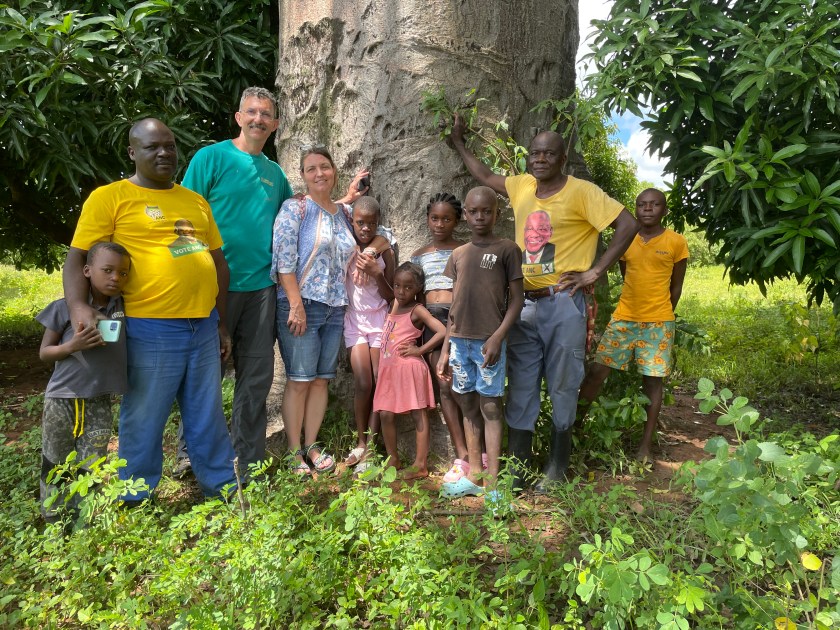
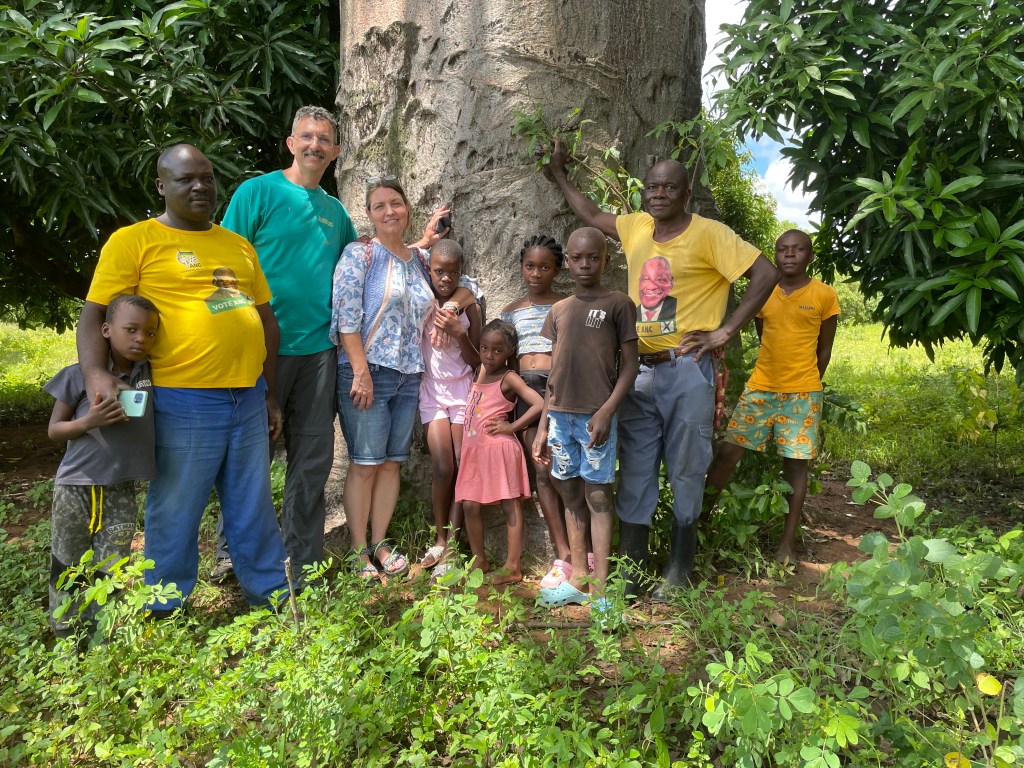
In April 2024, Mahala Love welcomed our newest supported site in KwaMhlanga, South Africa. We welcome Jacaranda Gardens. Jacaranda Gardens is owned by our Regional South Africa leader, Stephen N. and his wife, Brenda. We have been working with Stephen for the past 7 months as a leader in the area and are now proud to support his site, Jacaranda Gardens.

Jacaranda Gardens serves as a Mahala Love demonstration site in the area and has already hosted an Open House to showcase the large amount of food that can be produced in a very small foot print. The recent build is 1.2 X 2 meters in size and produces – meat, eggs, and vegetables. Additionally, water purification functions support a catfish/bubblefish tank for even more protein.

Stephen and his wife, Brenda, hosted Robin on this last trip in April 2024, which allowed lots of time for planning, laughing, and building community. Follow this link to see more about the build at Jacaranda Gardens.

Mahala Love is so pleased to welcome this sweet family and their beautiful garden. Mahala Love and Jacaranda Gardens – Sharing with the World

Posted in General Blogs, SA Specific - MCA

Would You “Bawk” at Chicken-ponics?

Most of us have heard of hydroponics, and many of us have heard of aquaponics, but have you ever heard of chicken-ponics?

Hydroponics is the growing of plants with a water-based, nutrient-infused solution, bypassing the need for soil. There are several methods including roots dangling in the nutrient solution from floating pots to hydroton pellets (expanded clay) that anchor the roots.

There is also aquaponics which takes the hydroponics system up a level by adding fish to the system. (Aquaculture is the raising of fish. Mix this with HydroPonics and you get AquaPonics. ) In a great oversimplification, in aquaponics, the fish water, complete with fish waste, is cycled through the plants. This cycling fertilizes the plants while purifying and aerating the water for passing back into the fish. These systems can contain worms to increase efficiency (vermiponics) but that’s more syllables than I care to discuss, but here is a link for better details on Aquaponics.

Now we come to the fun part: what happens if we add chickens on top of the fish? Better yet, what if we add chickens and rabbits? This is where things can get crazy. A little research shows a variety of animals have been added to aquaponics to add nutrient waste into the system and feed the fish, as well as produce food for humans and animals. I’ve seen ducks (quack-aponics), rabbits, or chickens thrown into the mix. We are possibly looking to incorporate rabbits and chickens along with the fish and plants. My concern is keeping the water healthy enough to grow fresh veggies with the chicken waste involved. We are looking at different versions now and welcome any ideas or constructive criticism. The plan will be completed the second week of April 2024 and the build will be the following week.

The ultimate goal will be to maximize food production while minimizing space and external inputs. The system will be located at our leader, Stephen’s property in South Africa, and will then be used to teach others in his community how to replicate this system. We will also be looking to replicate this system at our demonstration farm in the US – but that is future news to be announced in May!

Stay tuned for pictures, plans, and updates on what we build and how it works. If you would like to donate to Mahala Love and projects like this, please click here. Thanks for reading!

Posted in General Blogs

South Africa -Spring 2023

The beginning of 2023 has brought many adventures – Getting married being one of them! I am so happy to introduce Sam to the picture here at Mahala Love, not to mention to my life all around! He is funny, organized, and loves to do projects. He is a great asset to ML!

We had a combination Mahala Love working trip and honeymoon in South Africa in March. Sam got the crash course in people, food, places and our projects there. Except for the fact that he is very tall and South African shovels are perilously short, it was a great fit!

Together, Sam and I worked on the Seed library with Themba in Limpopo (see that page), met with Cinderella to design the new permaculture garden at the beautiful new school location, (See ML-South Africa, Mpumalanga) and did a little touristy sight seeing.

The trip was fantastic and never long enough. But September will be here soon enough and we can continue our work there. In the meantime, those locations are in very competent hands and the work continues there while we continue to work here.

Posted in General Blogs

Be Kind, Grow Things

It’s been pointed out lately that I tend to be, “reductive.” I think that’s code for terse, curt, short or any number of other words meaning not only – “to the point,” but most likely, “ too to the point.” Perhaps it is true. I do like a good basic noun-verb combination to start a conversation, with a few adjectives thrown in because I’m Southern by raising. Examples, “pick up your shoes” – Southern version – “Pick up your stinking shoes.”

I think it is in ideas that I tend to be reductive as oppose to words though. What seems to be complicated issues to some people, I seem to think are more simple. If you’re lost, either metaphorically or literally, why flounder alone driving in circles? Pause and ask for directions. When everyone is getting on my nerves, pause, look in the mirror, there is the source.

Here we are in the most confusing times of near history, with a nonstop onslaught of verbiage coming at us nearly 24/7. I find this hard to take. I don’t know why the same story is reported on 73.65 times in a single day, with 18 points of view from 13 people that I can see as having no connection other than someone handed them a microphone and a makeup artist to pat the shine off of their nose. Wait, who is this and why do they have an opinion and where did they get those facts and are those really facts and why do I trust her opinion and who told him to have that opinion in the first place and have any of these people actually searched for a fact on their own or are they merely regurgitating the spew from social media that will keep them existing as a persona, as opposed to be erased if the unpopular view dare be brought in to the light as anything that might beworthyofevenlookingatbutthenwhatabout… You get my point. Does anyone else feel this way?

So, with all of that, I would like to get to my point. Times are strange, people are stranger. I probably don’t understand you, and you probably don’t understand me. But I can still love you, honor you by listening to what you believe, and know you are a person as worthy of your opinions and place on this earth as am I. As we navigate unknown, unprecedented waters, let’s grow together – whether it be community, flowers, food, a government responsive to the folks who elect them, let’s all try and remember that we are neighbors, friends, and family long before and long after the stress and politics and pandemics of the day are over. Let’s just be kind, and grow some stinking things, shall we?

Posted in General Blogs

Regenerative lifestyle…

The word regenerative kept popping up, as things will do when something resonates with you. I was telling my kid’s dad that my goal has always been to create a regenerative home and life for our family. He asked me to explain and here is part of my reply.

Regenerative- practices that create abundance; Actions and thoughts that leave you full rather than depleted, Time spent rejuvenating energy, mind, and soul. Time spent with family developing bonds, ideas, and support. Creating a place where people can develop their next level thinking and plan their futures based on their hearts, not on needing to chase the dollar.

The whole permaculture design concept is about this. Permaculture is not just about how to plant a garden, it is about using regenerative practices in your life, for the benefit of yourself, others and the planet. Earth Care, People Care, Fair Share – in its simplest terms.
It’s a systemic design process using natural patterns and rhythms to create abundance- food, joy, community, habitat.

It is definitely taking some stretching in my mind to move these ideas from the garden into daily life, and it’s a process I have barely consciously tapped, as of yet. But as the word, “regenerative” continues to resonate with me, I will continue to bring it into the daily life of myself, my family, and my community.

I would love to hear your thoughts. Do you do this? What are ways you see to be regenerative in your relationships with others and the planet? 😊

Posted in US Specific Blogs

Herb Gardens

One of my first substantial gardens was an herb garden. I love the smell and ease of herbs and am fascinated at the many medicinal properties. That garden soon evolved to add a few flowers, that were also medicinal, then useful, and finally edible.

Being a practical person, today I like to grow things that are useful. Sometimes it’s food, sometimes it’s medicianl; I’ve even grown a small patch of flax for an unsuccessful attempt at making linen. In the end, I find herbs to be the workhorse of the garden. They are functional, useful and cheerful to my soul. Three snips from a blooming thyme plant, mixed with butter and spread on even store bought bread, makes me feel like the Julia Childs of my generation.

At Herban Renewal, we are in the very beginning of our first season of developing the gardens. The small urban lot is mostly taken up by the house in the center and giant varieties of hollies which take up most of the space. And while there is currently no dedicated herb garden yet, I find myself tucking herbs here and there, for their ability to repel bugs, thrive in a dry sunny spot, and mostly for their ability to make me smile when I brush by one.

Below are a couple of links for people’s ideas about herb gardens. Personally, I wonder how long some of these ideas can last after a photo shoot with tiny unglazed pots that would crack and dry up with a half of a August afternoon in these parts, but they are pretty and inspiring and maybe you’ll find an idea or two to build upon.

What is your favorite herb? How do you use it? I would love to know.

Go back

Your message has been sent

Warning
Warning
Warning
Warning

Warning.

Posted in General Blogs, Limpopo

Meet Themba

Avuxeni (Greetings).

Since I was introduced into Slow Food Network five years ago (2015), I started developing interests in practical activities of people producing food for their own consumption as well as to sell the surplus to their communities. This has encouraged me to be part of the Slow Food 10 000 gardens project in Africa, and since then we have created over 50 community gardens in Vhembe area, in association with Adopt A River group (an association of people with over 99% women representatives who voluntarily collect garbage to clean their community, water ways and river banks for better environment). I have been the coordinator of the Slow Food 10, 000 gardens project in Africa in Limpopo (South Africa), since then.  

Apart from that, I have been engaged in policy platform nationally, continentally and even globally with the Landless Peoples Movement of South Africa since 2011. I have participated in policy debate platforms led by the South African Government under the Department of Agriculture, Rural Development and Land Reform including Civil Society Mechanism Platforms.  I also had an opportunity to participate in the United Nations on the Declaration of Peasants Rights and Other people working in Rural Areas, in Geneva, Switzerland, for over six years until it was adopted in New York in my absentia in 2018 due to other logistical issues.  

With Mahala Love, we are going to complement the already work done on the ground and ensure that initiated projects are sustained through skills development and other programs that will benefit the community.

Food production is not a once off thing, it is a continuous practice that needs everyone in the world to play an important role, and there is a need for continuous support (Technical, Financial, Emotional, skills training, etc.) in community projects and Mahala love is here for that.

In reality, we cannot end poverty, but we can end hunger and the only way we can eradicate hunger and malnutrition is by affording the community the opportunities to grow their own food and place resources at their disposal and we want Mahala Love to be the vehicle to achieve this goal.

There is still much work to be done on the ground and by walking together we will go extra miles.

Inkomu (Thank you)